

A Pathway to climate neutrality for road transport
A Pathway to climate neutrality for road transport
We bring industry actors together across the fuel and automotive value chain, offering a platform that bridges technical and regulatory expertise.

Who we are
The Working Group on Monitoring Methodologies of CO₂-Neutral Fuels (WGMM) brings together a voluntary coalition of stakeholders from across the automotive value chain – feedstock to end-users – which includes fuel manufacturers and suppliers, vehicle manufacturers and their supply chain, logistics and distribution, and the retail sector, including equipment and marketing.

Objectives
Our goal is to define a new EU vehicle class using CO₂-Neutral Fuels, as was agreed by regulators in the emission standards for light-duty vehicles (2023) and heavy-duty vehicles (2024). Our 2024 Technical Report is the source for our technical engagement and advocacy outreach in Member States and at the EU level. We aim to become the go-to partner on the regulatory landscape of CO₂-Neutral Fuels.

Activities
The WGMM generates visibility through events, publications and meetings with public officials and relevant stakeholders. The Working Group is composed of a Steering Group, a Technical Subgroup (SG1), and a Regulatory Subgroup (SG2), supported by a Secretariat, and compliance lawyers. Members meet regularly to discuss common issues and prepare the group’s activities and outcomes.
Options for CO₂ Neutral Fuels
Eleven Monitoring Methodologies
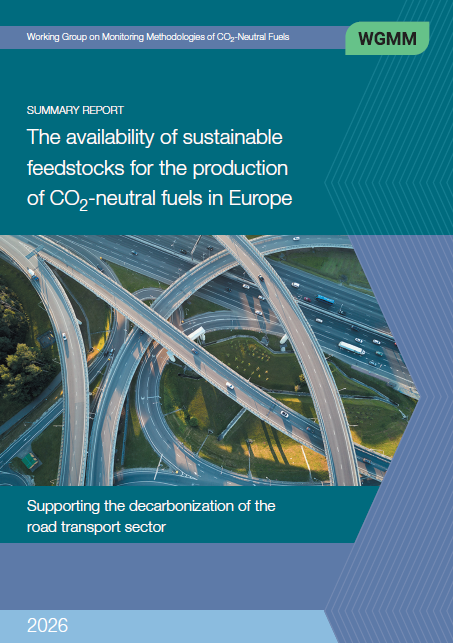
Our 2025/2026 Summary Report on Feedstock Availability
Europe’s sustainable feedstock base could be sufficient to supply CO₂‑neutral fuels for all transport modes. This summary report outlines key findings on feedstock types, potential supply up to 2050, and the synergies between road, aviation, and maritime fuel decarbonisation.
Key facts
WGMM at a glance
people directly involved
members
meetings held
pages of our 2024 Report